Family structures can be complex. Your EHR shouldn’t be.
Office Practicum connects the social, financial, and genetic relationships that make up a child’s family. Link siblings, parents, stepparents, guardians, and guarantors while keeping family history, contact information, and financial responsibility connected to the right people.

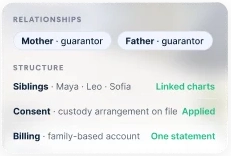
Because “family” can mean different things.

Support divorced, blended, foster, adoptive, and other family structures while keeping custody, guardianship, and family relationships clear across households, so your team knows who is authorized to access information and make decisions.

Keep genetic parents and siblings linked for family medical history, regardless of who lives together or who is financially responsible for care. OP can apply shared genetic family history across sibling records.

Connect family members by financial responsibility, manage guarantor relationships, transfer balances and credits among linked family members, and consolidate charges into one family statement.
Keep family information connected, without the extra work.
Change shared contact information once and automatically update it across linked family members, saving staff from making the same change in multiple patient records.
Keep siblings connected even when they have different parents, guardians, households, or financial relationships, so staff can work with the family without treating every child as a separate record.
Manage portal access and permissions around each child’s family relationships, helping staff navigate custody, guardianship, and other situations where access may differ from one person to another.
Copy insurance information from one child to another linked family member with the same guarantor instead of entering the same information again.
Built for the way families really work.
.webp)
A blended family with split custody, handled without workarounds.
When parents, stepparents, guardians, and siblings span multiple households, your team shouldn’t have to piece together who has access, who can make decisions, who is financially responsible, or which family history matters. Office Practicum keeps those relationships connected to the child.
Family relationships aren’t always straightforward. The answers can be.

Family structure management in Office Practicum lets practices define and connect a child’s social, genetic, and financial families separately. This helps accurately represent divorced and blended families, foster and adoptive families, siblings across households, different guarantors, and other family arrangements without forcing every relationship into a single household structure.