Meet Opie AI™, the AI assistant built exclusively for pediatrics.
Be present for the visit. Be done when the day is done. Opie turns pediatric conversations into structured clinical notes, suggests E&M and ICD-10 codes, and creates clear after-visit summaries for families. Built for pediatric care and integrated with Office Practicum, it helps you stay focused on your patients, finish documentation faster, and leave your notes at the office when you head home.
.webp)
AI that understands the pediatric visit.

Opie is trained on AAP Bright Futures guidelines and Office Practicum’s pediatric templates, so it understands the nuances of well visits, sick visits, and the conversations that make pediatric care different.

Pediatric visits rarely involve just two people. Opie follows conversations between providers and families, even when multiple people or languages are involved, and turns the visit into one clear clinical note.

Opie sends discrete data directly into the appropriate chart fields, so your documentation is where you need it. It can also suggest E&M and ICD-10 codes and create a family-friendly after-visit summary.
From conversation to completed documentation. In four simple steps.
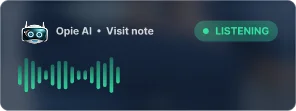
Opie listens to the entire visit, keeping track of who said what and capturing the details that matter across multiple speakers and languages.
Opie turns the conversation into structured documentation in your preferred format, with Magic Edit, dot phrases, and suggested E&M and ICD-10 codes to help you finish faster.
You stay in control. Review the draft, make any changes, and approve the final note while Opie creates a clear after-visit summary for the family.
Customize how Opie creates your notes so they match your preferences and workflow, making documentation faster and easier with every visit.

“With Opie AI, I can actually see my patients. If it did nothing else but let me look a depressed teenager in the eye and say, ‘You’re going to be okay’ — without breaking that connection to type — that alone would make it worth it.”
.webp)
Not every AI scribe understands pediatrics.
“I really like using Opie AI for behavioral health visits and those life concerns that don’t fit neatly into a template. I also appreciate how it captures side concerns and codes them alongside the main complaint — it helps document the true complexity of the visit.”
.webp)
Questions about Opie AI™ ? Start here.

Opie AI™ is a pediatric-specific AI medical scribe that listens to patient-provider conversations and automatically generates clinical documentation.
Unlike generic AI scribes, Opie AI is trained specifically for pediatric care, including AAP Bright Futures guidelines and Office Practicum’s pediatric workflows and templates. This allows it to understand the unique language, documentation requirements, and visit types commonly seen in pediatric practices.
During a patient encounter, Opie AI captures the conversation in real time and identifies key clinical information, including symptoms, exam findings, diagnoses, treatment plans, and follow-up instructions. It then organizes that information into structured visit notes that are ready for provider review.
Opie AI can also support documentation that begins during patient intake, suggest appropriate E&M and ICD-10 codes, generate clear after-visit summaries for families, and help manage multilingual conversations by translating them into a single clinical note.
The result is faster, more complete pediatric documentation that allows providers to spend less time charting and more time focused on patients and families.